

Brick, old townhouses, parks, churches, elegant neighbourhoods and a history that does not stand behind museum glass here but mingles with people on their way to work, joggers, students and tourists staring at Google Maps. Today we belonged to that last group. We started with the Public Garden: elegant, calm, huge trees, paths and people sitting on benches.

Right next to it lies Boston Common, established in 1634 and considered the oldest public park in the United States. Boston itself had been founded four years earlier, in 1630, by English Puritans. Poland at that time was ruled by Sigismund III Vasa, the Polish-Lithuanian Commonwealth was one of the largest states in Europe, Warsaw was already the seat of the royal court, and Polish kings were still crowned at Wawel Castle in Kraków. In other words, when Boston was a wooden settlement on the shore of a continent most Europeans knew nothing about, we were a European power.

Less than 150 years later the roles began to change. In Boston, residents rebelled against London. In 1773 they threw a cargo of British tea into the harbour because they had no wish to pay taxes imposed by a parliament in which they had no representation. The Boston Tea Party became one of the symbols of the road to the American Revolution.

And what was happening in Poland at the time? A year earlier, in 1772, came the First Partition of the Commonwealth, when Russia, Prussia and Austria carved off a third of its territory. The comparison is striking. The Americans were beginning to build a state; we were beginning to lose ours. So we walked the Freedom Trail. The Granary Burying Ground, old churches, places connected with the Revolution, the names of people who in Poland sound a bit like a chapter from a textbook and here suddenly lie two metres from the pavement. Samuel Adams, Paul Revere, John Hancock. You begin to understand that for Americans Boston is more than just another big city. It is one of the places where their political identity was born. And it was precisely in a city that attaches such importance to the right direction of history that I misread the direction on Google Maps. We set off. Confidently. Decisively. Three kilometres later I discovered that we were walking in exactly the opposite direction. We had not taken one wrong street. We had not gone one crossing too far. We had walked three kilometres. Then, of course, those three kilometres had to be walked back. In this way Google Maps, with my personal and significant contribution, enriched today’s Boston sightseeing programme by six kilometres that were in no plan whatsoever. You cannot even blame Google. Google knew where we were. Google knew where we were supposed to go. Google showed the right direction. The only weak link in the system was me.

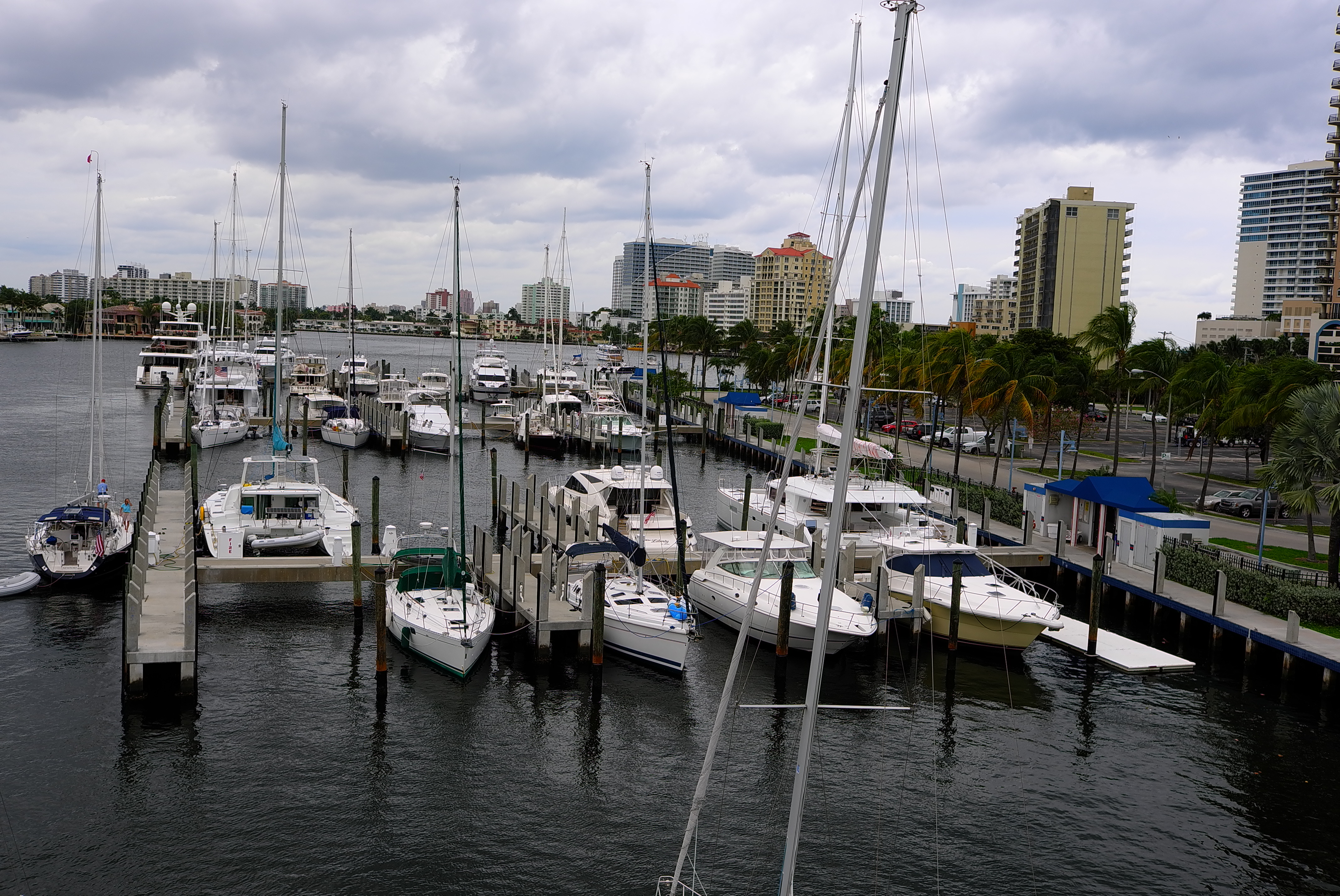
After these attractions we finally reached lunch. We ate, we rested, our faith in life returned, and then it was time to pay. I handed over my card. Declined. Once more. Declined. Of course I have a second card. I am a prudent man and never travel with just one. The problem was that, being an exceptionally prudent man, I had left the second card in the hotel safe. It was therefore completely secure. Especially from the possibility of being used to pay for lunch. From the restaurant’s point of view the situation was getting more and more interesting. A European tourist has eaten lunch, his card does not work, and the second one supposedly exists but is somewhere in a hotel safe. Somebody called the police. The officers came, listened to the story and took down my details. I do not know where such information travels now, or when it might come in handy. Perhaps in a few years, at the US border, someone will look at a screen and ask: “Sir, did you have certain difficulties settling a lunch bill in Boston in 2026?” I will then have to explain that I was solvent. I had the money. I had the card. Only the bank had its own idea of my holiday. So I called the bank. From the USA. On roaming. For about half an hour I waited my turn, listening to what was probably the most expensive music I heard during my entire stay in America. I do not yet know how much this concert will cost, but my mobile operator will no doubt inform me with its customary elegance. Finally an adviser picked up. The bank had blocked the card for security reasons because I was using it in the United States without having reported my trip in advance. Sounds reasonable. There is just one small detail. We have been in the States for a week. I had already paid with the card here. For a week the bank watched its customer living in America, driving around New England and paying in dollars, and apparently saw nothing suspicious in it. Until today. Today the security system woke up. If someone really had stolen my card a week ago, by the time the bank decided to protect me the thief would probably have gone shopping, toured Cape Cod, eaten a few lobster rolls and flown back to Europe. The bank, meanwhile, decided to intervene precisely when the cardholder was sitting in a restaurant trying to pay the bill. That is not fraud protection. That is protecting the money from its owner. What I like most, though, is the logic of it all. For a week the bank accepts American transactions, and then it suddenly decides: hold on, this man is in America! Brilliant. In the afternoon we went back to walking. The Waterfront and the Harborwalk show a completely different Boston. Water, marinas, ships, new apartment blocks and old wharves. And once again history comes back on its own.


It was the harbour that made Boston one of the most important cities of colonial America. Goods, people, money and news came through here. This is where the conflict with Great Britain grew. This is where tea stopped being a drink and became a political weapon. In Poland, a little under twenty years later, we adopted the Constitution of 3 May 1791. By then the Americans already had their own constitution and were building the institutions of a new state. We were still trying to save the old one. History can be brutal when you put two dates side by side. At the end of the day my phone showed about 17 kilometres on foot. Six of them completely pointless. And then something happened that best illustrates the scale of today’s expedition. Even Ela had to sit down and rest. Ela is usually indefatigable. You can cross cities, parks, harbours, museums and kilometre after kilometre with her, and she keeps going. If Ela says it is time to sit down, the situation is serious.

So we sat down. Behind us were 17 kilometres of Boston, Puritans, revolutionaries, cemeteries, parks, the Freedom Trail, the harbour, six kilometres resulting from my talent for navigation, an attempted lunch fraud that never was, a police intervention and a half-hour international concert of bank hold music. We will remember Boston. Not only because the American Revolution began here. Also because it was here that I discovered three things. Google Maps works much better when you look at which way the arrow is pointing. A spare card is most useful when it is not lying in a safe. And a bank can fail to notice for a whole week that you are in America, and then save you from yourself at exactly the moment you need to pay for lunch. Tomorrow we move on. North.





















Leave a Reply